History Place
Navigation act video
Sunday, April 27, 2014

Tuesday, April 22, 2014
Bees Bees
This week Bee wanted to teach about Bee's. This is very interesting
Here are some things we will be doing
Bee's making honey out of nectar
We are also talking about pollination

Here are some things we will be doing
Bee's making honey out of nectar
We are also talking about pollination
Thursday, April 10, 2014

Friday, March 7, 2014
Miss Mee's Clownfish
The study of anemonefish is a perfect setting to introduce the idea of symbiosis. Even small children can understand long-term interactions between different species that are mutually beneficial. There are so many instances in nature where this occurs the anemonefish is just one example. For my older children Mee will give them the challenge of finding two more examples of symbiosis in nature.
kidzworld.com

symbiosis video
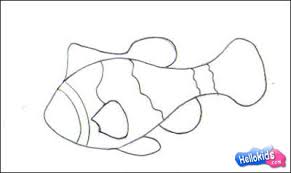
Learn to draw a clownfish
kidzworld.com
symbiosis video
Learn to draw a clownfish
Plymouth Colony

History.com
Plymouth's government was initially vested in a body of freemen who met in an annual General Court to elect the governor and assistants, enact laws, and levy taxes. By 1639, however, expansion of the colony necessitated replacing the yearly assembly of freemen with a representative body of deputies elected annually by the seven towns. The governor and his assistants, still elected annually by the freemen, had no veto. At first, ownership of property was not required for voting, but freemanship was restricted to adult Protestant males of good character. Quakers were denied the ballot in 1659; church membership was required for freemen in 1668 and, a year later, the ownership of a small amount of property as well.
Plymouth was made part of the Dominion of New England in 1686. When the Dominion was overthrown (1689), Plymouth reestablished its government, but in 1691 it was joined to the much more populous and prosperous colony of Massachusetts Bay to form the royal province of Massachusetts. At the time Plymouth Colony had between 7,000 and 7,500 inhabitants.
Oscar Zeichner
Bibliography: Adams, J. T., The Founding of New England (1921; repr. 1963); Bradford, William, Of Plymouth Plantation, 1620–1647, ed. by S. E. Morison (1952); Deetz, James and Patricia Scott, The Times of Their Lives: Life, Love and Death in Plymouth Colony (2000); Demos, John, A Little Commonwealth — Family Life in Plymouth Colony (1988); Langdon, G. D., Jr., Pilgrim Colony (1966); Morison, S. E., The Story of the Old Colony of New Plymouth (1956); Smith, Bradford, Bradford of Plymouth (1951); Stratton, E. A., Plymouth Colony: Its History and People (1987).
(From scholastic.com)
plymouth colony powerpoint
FOR THE YOUNGER KIDS

reenactment
Thursday, February 20, 2014
Bee's Squid
This week Bee is teaching us about squids. She has a lot of fun things planned for us. I will be helping her with some of these lessons. We will start off by talking about the importance of working as a team and taking different scientific approaches for a common goal.


Squid Dissection - We used this as a guide to our dissection
After we identified the organs, the pen and the beak as well as the sex of our squid, we cleaned them and fried them up.


http://www.discovery.com/tv-shows/curiosity/videos/the-giant-squid-discoverers.htm
"The giant squid discoverers" at discovery.com explains a wonderful approach to solving scientific problems and working on research as a team.
Giant squid
Squid experiment - almost unschoolers

origami squid
Tree of Life

CBS News - Hombolt Squid

winky the homboldt squid

Squid Dissection - We used this as a guide to our dissection
After we identified the organs, the pen and the beak as well as the sex of our squid, we cleaned them and fried them up.
We fried them up in butter, garlic, and onion. I thought they were rather tasty but the kids thought they were a little fishy. Imagine that.
Bee liked them the most. She chowed down and finished off several of them
http://www.discovery.com/tv-shows/curiosity/videos/the-giant-squid-discoverers.htm
"The giant squid discoverers" at discovery.com explains a wonderful approach to solving scientific problems and working on research as a team.
Giant squid
Squid experiment - almost unschoolers
origami squid
Tree of Life
CBS News - Hombolt Squid
winky the homboldt squid
Coffee filter squid
 |
| We took two coffee filters and put a little stuffing between two and stapled them together |
 |
| Then we made tentacles and arms by cutting strips out of another filter and stapled them on the bottom and painted them with watercolor. |
 |
| In the end we made a squid wall to display our little critters |
 |
| We also created salt dough squid and baked them |
Sunday, February 2, 2014
Early American Explorers 1535-1543
Monday


- 1535 - Jacques Cartier travels up the St. Lawrence River to Quebec and Montreal.
biography clip
- 1539 - Fray Marcos de Niza searches for the Seven Cities of Gold and wanders over New Mexico.


Wednesday
1539-41 - Hernando de Soto explores Florida, Georgia, and Alabama, and becomes the first European to cross the Mississippi River.


1540-42 - Francisco Vásquez de Coronado explores the Gila River,
the Rio Grande, and the Colorado River. He reaches as far north as
Kansas before returning to Mexico City. He too searches for the
legendary Seven Cities of Gold.


Friday
1542 - Juan Rodriguez Cabrillo sails up the California Coast and claims it for Spain.


1543 - Followers of Hernando De Soto sail from the Mississippi River to Mexico.
Bartolome Ferrelo continues sailing north up California and reaches what is probably present day Oregon.
Bartolome Ferrelo continues sailing north up California and reaches what is probably present day Oregon.
Subscribe to:
Posts (Atom)